The Magnificent Ram Mandir of Ayodhya
The Shri Ram Janmabhoomi Mandir in Ayodhya stands as one of the most significant religious and architectural achievements of modern India. Consecrated in January 2024, this grand temple marks the believed birthplace of Lord Ram and has become the most visited pilgrimage site in the country.
Historical Significance
Ayodhya has been revered as the birthplace of Lord Ram for millennia. The site of the Ram Janmabhoomi has a long and complex history that spans centuries. The construction of the current temple was made possible after the Supreme Court of India's landmark verdict in November 2019, which paved the way for the Shri Ram Janmabhoomi Teerth Kshetra Trust to oversee the construction.
The temple's foundation stone was laid on August 5, 2020, and the Pran Pratishtha (consecration ceremony) took place on January 22, 2024, marking a historic moment for millions of devotees worldwide.
Architectural Marvel
The Ram Mandir is built in the traditional Nagara style of Hindu temple architecture, which is characterised by its towering shikhars (spires) and intricate stone carvings. Here are some remarkable facts about the temple's architecture:
- Material: The entire temple is constructed using Bansi Paharpur sandstone from Rajasthan, without any steel or iron
- Dimensions: The temple spans 380 feet in length, 250 feet in width, and 161 feet in height
- Floors: The temple has three floors, each standing 20 feet high
- Pillars: 392 pillars and 44 doors adorn the temple, each featuring intricate carvings depicting Hindu deities and scenes from the Ramayana
- Shikhars: Five mandaps (halls) are crowned with magnificent shikhars
- Technology: The temple is designed to withstand earthquakes and has a lifespan estimated at 1,000 years
The temple complex also includes a museum, a library, a community kitchen (langar), and beautifully landscaped gardens.
Darshan Timings and Schedule
The temple follows a structured schedule to manage the large number of visitors:
| Session | Timing | Notes |
|---|---|---|
| Morning Aarti | 6:00 AM | Special morning prayers |
| Morning Darshan | 7:00 AM - 11:00 AM | Best time for fewer crowds |
| Afternoon Break | 11:00 AM - 2:00 PM | Temple closed for bhog |
| Evening Darshan | 2:00 PM - 7:00 PM | Can be crowded on weekends |
| Evening Aarti | 7:00 PM | Beautiful lamp ceremony |
Note: Timings may vary during festivals and special occasions. It is advisable to check the official website or contact the temple trust before your visit.
Essential Visiting Tips
What to Wear
- Modest and respectful clothing is recommended
- Avoid shorts, sleeveless tops, and revealing attire
- Traditional Indian attire (kurta-pyjama, saree, salwar-kameez) is appreciated
- Comfortable footwear that is easy to remove (shoes must be left outside)
What to Carry
- A valid government ID (Aadhaar, passport, etc.)
- Mobile phones are allowed but photography rules may apply
- Carry minimal belongings as large bags may not be permitted inside
- Water bottle (stay hydrated, especially in summer)
What to Avoid
- Leather items may not be allowed inside the temple premises
- Avoid carrying food items into the temple
- Photography and videography restrictions apply in certain areas
- Avoid visiting during peak festival days if you prefer a calmer experience
Best Time to Visit
While the temple welcomes visitors throughout the year, certain periods offer a better experience:
- October to March: Pleasant weather, ideal for temple visits and exploring the city
- Ram Navami (March/April): Grand celebrations but extremely crowded
- Deepotsav (October/November): Spectacular Diwali celebrations with millions of lamps
- Weekdays: Significantly fewer crowds compared to weekends and holidays
Getting to Ram Mandir from Saryu Sankul
Saryu Sankul Homestay is located just 1.5 km from Ram Mandir, making it one of the most conveniently located accommodations for temple visitors. You can reach the temple:
- Walking: A pleasant 20-minute walk through the historic streets of Ayodhya
- Auto-rickshaw: A 5-minute ride costing approximately ₹30-50
- E-rickshaw: Available throughout the city for short distances
Our staff at Saryu Sankul can help you plan your temple visit, including the best times to go and the most scenic routes to walk. We also offer early morning wake-up calls for guests who wish to attend the morning aarti.
Nearby Attractions to Combine
After your Ram Mandir darshan, you can easily visit these nearby attractions:
- Hanuman Garhi (500m from Ram Mandir) — A hilltop temple with panoramic city views
- Kanak Bhawan (300m from Ram Mandir) — The golden palace temple of Ram and Sita
- Dashrath Mahal (400m from Ram Mandir) — The ancient royal palace
- Saryu River Ghats (1.5 km) — Perfect for the evening aarti experience
Book Your Stay Near Ram Mandir
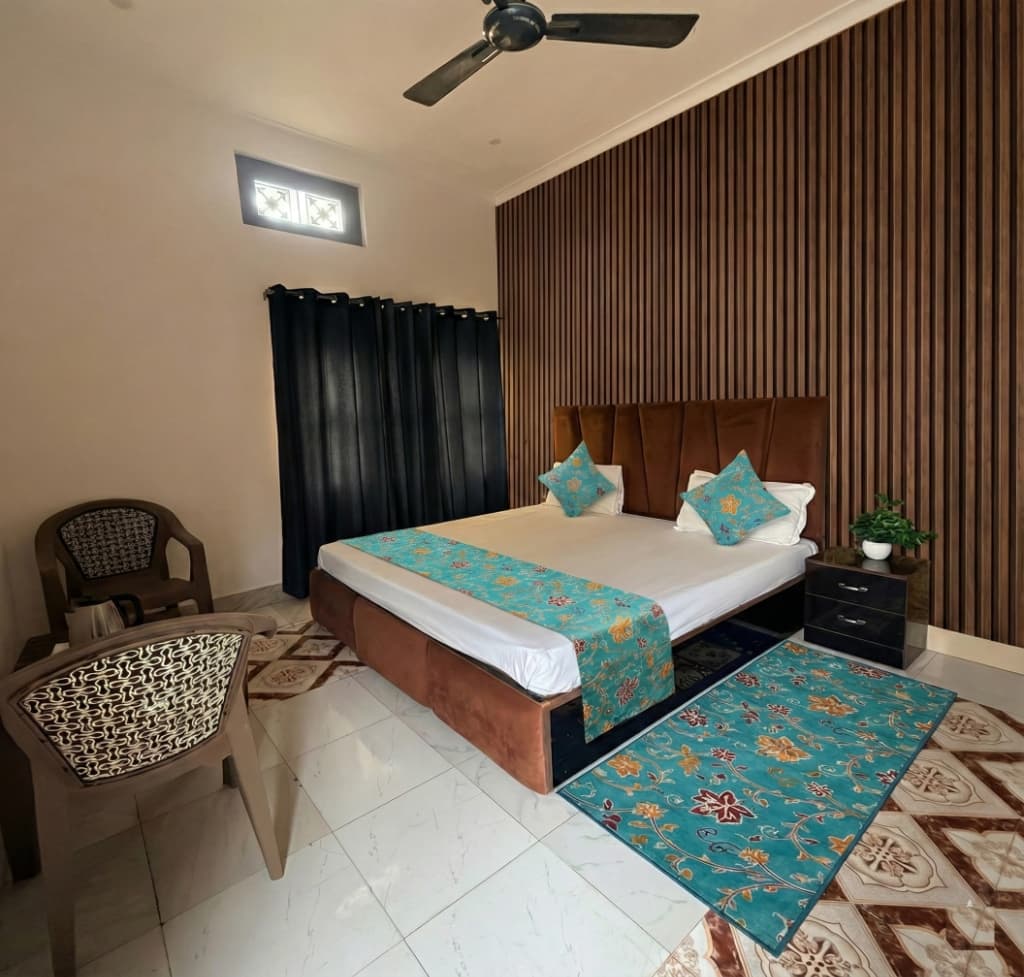
Stay at Saryu Sankul Homestay for the most comfortable and convenient Ram Mandir experience. Our rooms start from just ₹1,500/night, and our location at Laxman Ghat means you can combine your temple visit with the beautiful Saryu River experience. Contact us at +91-8375879752 to book your spiritual retreat.